Enamel masters represent a labour-intensive craft that carries a traditional way of making things into the present day. In this article we look at what vitreous enamel is, the advantages of enamel and how enamel masters carry out the production process.
Enamel masters
Before we turn to the skilled makers behind these labour-intensive products, we should say a few words about the craft itself and what it means. As you know, enamel kitchenware has been enjoying a revival over the last few years. And believe it or not, it is still made with the same techniques used many years ago, preserving the traditional way of production. Of course, some differences and machines brought by technology do come to the aid of our enamel masters. Manufacturers are also obliged to apply certain standards and procedures and to ensure their safety.
All enamel kitchenware goes through a number of stages during production.
What is vitreous enamel?
Enamel is a material made by fusing powdered glass onto a base layer. It is fired with added pigments. Coating steel parts with enamel protects the base material from rust, gives the piece an attractive look and guarantees health and safety when enamel is used in the kitchen. Its durability comes from firing at high temperatures (around 850 °C). This not only makes it durable but also makes it suitable for any hob (including induction) and dishwasher safe.
The advantages of enamel
Above all, enamel is timeless. You can use it with peace of mind wherever you like: in the freezer, in the oven, over a direct flame or on a campfire. It is very easy to clean. It is never toxic; no harmful substances are used in its production. It is resistant to wear, rust and UV. It is very practical to use and extremely safe for your health.
Do you know why you can safely put one kind of enamel piece on a campfire but not another? Have you ever wondered about the difference, since all enamel mugs look almost the same? Certain production methods are the key here. Enamel masters carefully use mugs made from the highest quality steel and ceramic decals fired onto the final enamel layer, and all of this makes them the most valuable and useful enamel vessels!
So how do enamel masters make enamelware?
Enamel production is divided into two main stages.
First, sheet metal is cut into separate discs. These are then pressed at high pressure to form the body of the piece. Metal parts such as handles or rims are then added and welded together to complete the metal form.
Enamelling the metal form: this stage has a few more details.
Ground coat: This is where the material is covered with a base coat to prepare it for the outer layer. The piece is then inspected by quality control teams. If it passes, it can be fired at very high temperatures. After firing, it is inspected once more to make sure there are no defects.
Enamel coating: The second part of enamelling is where your design truly comes to life! The enamel master knows this stage well. This is where the piece gets its colour, giving it the aesthetic and practical qualities it needs. If the inner and outer colours differ, the inner coat is applied first. Once dry, a special enamel is applied to the rim. It is made specifically to protect this area and has to be especially durable. The piece is then fired once more before another thorough inspection (all of this is needed to meet high production standards).
Decoration: After all this, if the products need to be decorated with a logo or other image, decoration is also a time-consuming process. First the decal is applied by hand. Then, of course, it must be dried and fired at very high temperatures (once again!). After a final quality check, the products are passed on to the relevant departments.
How to use your enamelware
Here are a few tips for using these precious enamel pieces for many years.
You can use enamel on induction, gas or electric hobs, in the oven, on a campfire, in the dishwasher, in the fridge or in the freezer.
* Tea or food may stain enamel. This is a natural process, so don't worry when it happens.
* Enamel is a tough material that can survive a lot. However, like glass, it will chip if it is subjected to a strong impact. Avoid dropping your enamelware, especially onto hard surfaces.
Do not use abrasive cleaning pads (such as the green side of a scouring sponge) or gritty soap powders.
Do not use in the microwave.
Enamel vessels are made of steel and therefore conduct heat better than other mugs. They can even feel hotter than the drink inside them. Take care.
Do not use damaged enamel vessels for hot food and drinks. Between the steel and the final coloured enamel there are layers that protect the piece and should not come into contact with your food or drinks. Normally this is the ground coat, but it is still worth taking care.
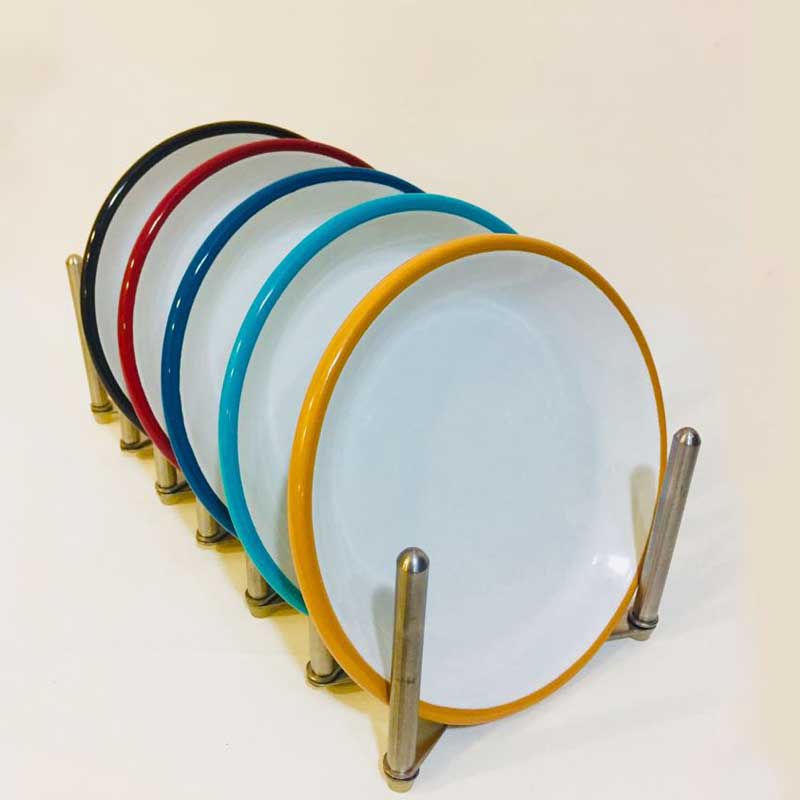
Enamel Dessert Plate 17 cm
We have touched on the products and the production stages our masters work through, making by hand a product that demands such care and puts health and hygiene first, before it reaches our tables and kitchens. Enamel production was once concentrated in the Aegean region; today it continues to be carefully made by enamel masters in many provinces across Anatolia, in a range of qualities.
Stay with enamel, stay healthy.
Enamel Masters